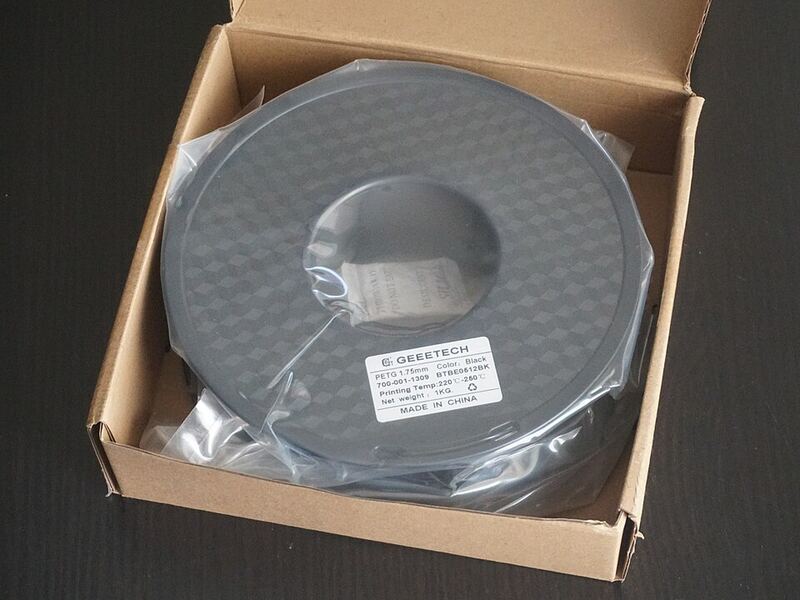
Materials › PETG

PETG Glycol-modified polyethylene terephthalate

The tougher all-rounder. More heat- and impact-resistant than PLA with only a little more fuss.

About PETG

Overview

  • The usual step up when PLA is not tough enough: functional parts, warm spots, drops, and outdoor use in the shade.
  • A bit fussier than PLA: hotter, less part cooling, and dry filament.
  • Plain PETG is the safe default; Rapid PETG is the high-speed version.

Pros

  • Tougher and less brittle than PLA; flexes before it breaks
  • Softens around 75-85 °C, a step above PLA (handles most car interiors)
  • Good layer adhesion, so parts hold together well
  • Printed parts resist water and many chemicals better than PLA

Cons

  • Stringing and blobs unless settings are dialed in
  • Soaks up moisture from the air, so keep it dry
  • Sticks very well to smooth PEI; use a release agent or glue stick to protect the plate
  • Scratches more easily and is a bit less crisp on fine detail than PLA
  • Not UV-stable for years in full sun: it can yellow and weaken over months to years, so use ASA for that

Typical settings

Nozzle
230-250 °C
Bed
70-85 °C
Enclosure
Optional (helps with large parts and drafts)
Drying
60-65 °C for 6-8 h

PETG variants

Results

  • The tougher everyday choice. More heat- and impact-tolerant than PLA, and decent outdoors in the shade.

    • Functional parts
    • Load-bearing / mechanical

    Nozzle 230-250 °CBed 70-85 °C

    Strength
    4 out of 5
    Heat
    3 out of 5
    Ease
    3 out of 5
  • PETG tuned for high-speed printing. Same toughness, faster flow, fewer compromises at speed.

    • Functional parts
    • Load-bearing / mechanical

    Nozzle 240-260 °CBed 70-85 °C

    Strength
    4 out of 5
    Heat
    3 out of 5
    Ease
    3 out of 5
  • Unpigmented, translucent PETG. Good for light covers, windows, and parts you want to see through.

    • Display / decorative
    • Wet / water-resistant

    Nozzle 230-250 °CBed 70-80 °C

    Strength
    4 out of 5
    Heat
    3 out of 5
    Ease
    3 out of 5
  • PETG-CF

    Home, with precautions

    PETG filled with carbon fiber. Stiffer, with a matte finish and cleaner prints.

    • Functional parts
    • Load-bearing / mechanical

    Nozzle 240-270 °CBed 65-80 °C

    Strength
    4 out of 5
    Heat
    3 out of 5
    Ease
    3 out of 5

Sources

Figures vary by brand and test method; check your filament's datasheet.