Materials › PLA

PLA Polylactic acid (polylactide)

The friendly default. Easy, cheap, and comes in every color and finish you can imagine.

About PLA

Overview

  • Where almost everyone starts: stiff, crisp detail, rarely needs tuning.
  • Not for heat or impact. For warm places or parts that flex, use PETG.
  • Comes as plain, PLA+ (tougher), Rapid (fast printers), and Matte or Silk (looks).

Pros

  • Easiest filament to print; forgiving on almost any printer
  • Little warping, no enclosure needed
  • Huge range of colors and finishes (matte, silk, rapid, and more)
  • Cheap and widely available

Cons

  • Softens around 55-65 °C (glass transition), so it can deform in a hot car or near a heater
  • Brittle: tends to snap rather than bend
  • Degrades slowly outdoors in sunlight and moisture

Typical settings

Nozzle
190-220 °C
Bed
50-60 °C
Enclosure
Not needed
Drying
45-50 °C for 4-6 h if it gets stringy or pops (stay under 50 °C so the spool does not deform)

PLA variants

Results

  • Standard PLA. Cheap, easy, and the right answer for most decorative and low-stress prints.

    • Display / decorative
    • Quick prototypes

    Nozzle 200-220 °CBed 55-60 °C

    Strength
    3 out of 5
    Heat
    1 out of 5
    Ease
    5 out of 5
  • PLA with toughening additives. Less brittle and a bit stronger, still easy to print.

    • Functional parts
    • Quick prototypes

    Nozzle 205-225 °CBed 55-65 °C

    Strength
    4 out of 5
    Heat
    1 out of 5
    Ease
    4 out of 5
  • PLA tuned to melt and flow quickly so high-speed printers can run fast without under-extruding.

    • Fast / bulk printing
    • Quick prototypes

    Nozzle 210-230 °CBed 55-65 °C

    Strength
    3 out of 5
    Heat
    1 out of 5
    Ease
    4 out of 5
  • The speed of Rapid PLA with the toughening of PLA+. A strong choice for fast functional prints.

    • Fast / bulk printing
    • Functional parts

    Nozzle 215-235 °CBed 55-65 °C

    Strength
    4 out of 5
    Heat
    1 out of 5
    Ease
    4 out of 5
  • PLA with a non-glossy, velvety finish that hides layer lines and fingerprints.

    • Display / decorative
    • Cosplay & props

    Nozzle 200-225 °CBed 55-65 °C

    Strength
    2 out of 5
    Heat
    1 out of 5
    Ease
    4 out of 5
  • Shiny, pearlescent PLA with a metallic or satin sheen. Prints beautifully but is weaker than normal PLA.

    • Display / decorative
    • Cosplay & props

    Nozzle 215-230 °CBed 55-65 °C

    Strength
    2 out of 5
    Heat
    1 out of 5
    Ease
    3 out of 5
  • PLA with fine glitter particles that catch the light. Easy to print and fun to look at.

    • Display / decorative
    • Cosplay & props

    Nozzle 200-225 °CBed 55-65 °C

    Strength
    3 out of 5
    Heat
    1 out of 5
    Ease
    4 out of 5
  • PLA with a speckled, stone-like look. Easy to print and good at hiding layer lines.

    • Display / decorative
    • Cosplay & props

    Nozzle 200-225 °CBed 55-65 °C

    Strength
    3 out of 5
    Heat
    1 out of 5
    Ease
    4 out of 5
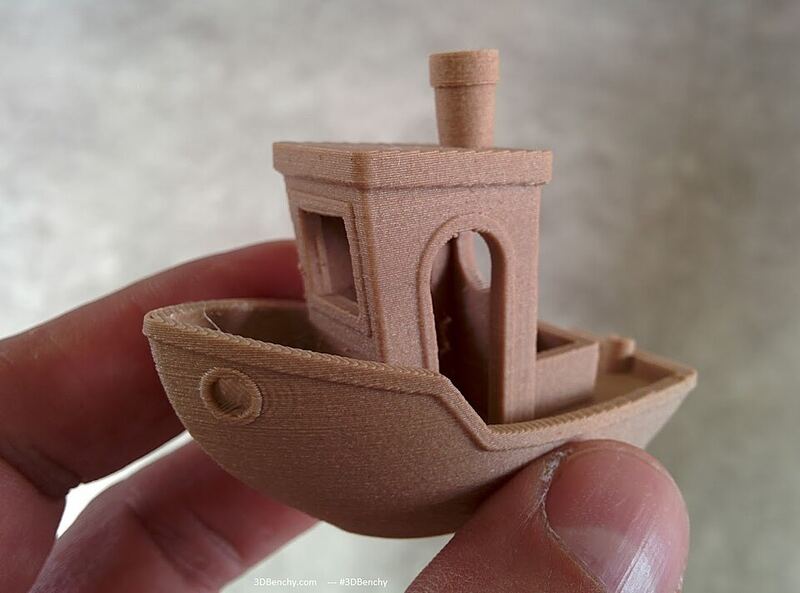
  • PLA blended with wood fibers for a warm, sandable, stainable look. Fussy to print.

    • Display / decorative
    • Cosplay & props

    Nozzle 190-215 °CBed 50-60 °C

    Strength
    2 out of 5
    Heat
    1 out of 5
    Ease
    2 out of 5
  • Glow-in-the-dark PLA

    Home, with precautions

    PLA with glow pigment that charges in light and glows for hours. Great for fun, poor for strength.

    • Display / decorative

    Nozzle 200-220 °CBed 55-60 °C

    Strength
    2 out of 5
    Heat
    1 out of 5
    Ease
    3 out of 5
  • PLA-CF

    Home, with precautions

    PLA filled with chopped carbon fiber. Very stiff, matte, and low-warp, but brittle and hard on nozzles.

    • Functional parts
    • Quick prototypes

    Nozzle 210-240 °CBed 50-65 °C

    Strength
    3 out of 5
    Heat
    2 out of 5
    Ease
    3 out of 5

Sources

Figures vary by brand and test method; check your filament's datasheet.